Urea, water-soluble fertilisers (NPK, MAP, ammonium sulphate, potassium sulphate) and most industrial salts are hygroscopic: they absorb moisture from the air. After a few weeks in storage — especially in a coastal climate like Casablanca — the product recrystallises at the surface and forms hard lumps.
Those lumps block everything: they bridge in hoppers, they jam transfer screws, they prevent accurate dosing and they make the product unsellable as is. The conventional answer — a hammer mill with a sizing screen — creates another problem: the screen blinds immediately with a wet, sticky product, and frictional heating partly re-melts the material.
The G.EUROPELEC cage mill solves both at once: it de-agglomerates by pure impact, at high speed, with no screen at all.
The cage rotor principle
The rotor consists of bars arranged in a cage around a shaft, rotating at high speed. Product enters from the top and meets the bars at full speed: agglomerates shatter on impact, while already-free grains — smaller and lighter — pass through the cage without being ground.
This is the essential difference from a conventional mill: the cage does not aim to reduce the product to a fine size, it simply breaks lumps back into the original grain. Your fertiliser granules come out intact, at their commercial size, merely freed from the lumps.
The absence of a screen also means there is nothing to blind, nothing to clean between campaigns, and no build-up of sticky product in dead zones.
Integration into your line
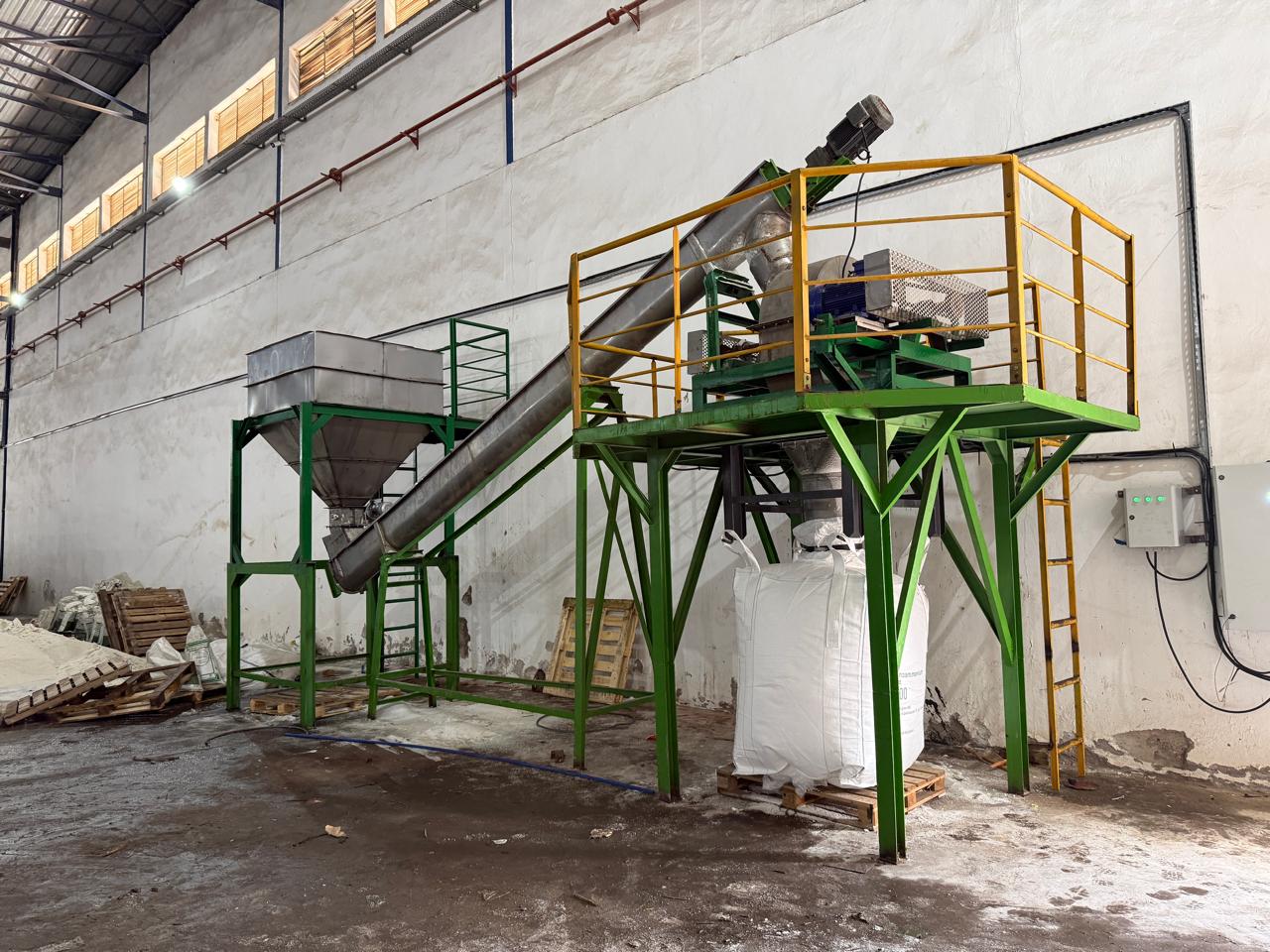
The crusher installs between storage and the packing station. Feed is via a receiving hopper with a metering screw or conveyor, which regulates infeed and avoids surge loading.
At the outlet, three destinations depending on your process:
- To a belt bagging machine or a bagging station for direct packing into bags or big bags
- To a big-bag filling station for later reprocessing
- To a dissolution tank, for soluble fertilisers intended for fertigation
The unit is mounted on a steel structure with access walkway and supplied with its electrical control panel.
What you actually gain
Caked fertiliser stock is frozen capital. Without a crusher the options are all bad: breaking lumps by hand with a hammer (dangerous, slow, labour-intensive), downgrading the product, or selling it at a loss.
The cage mill returns to circulation stock you have already paid for. On a fertiliser campaign where several hundred tonnes may be affected, the investment pays back in a single season.
It also protects your downstream process: a bagging machine fed with de-agglomerated product holds its output rate and weighing accuracy. A bagging machine fed with lumpy product stops every ten minutes.