Buying formulated fertiliser and reselling it means accepting whatever margin the producer leaves you — and whatever formulas they offer. Producing your own blends from simple raw materials changes both the economics and the commercial proposition.
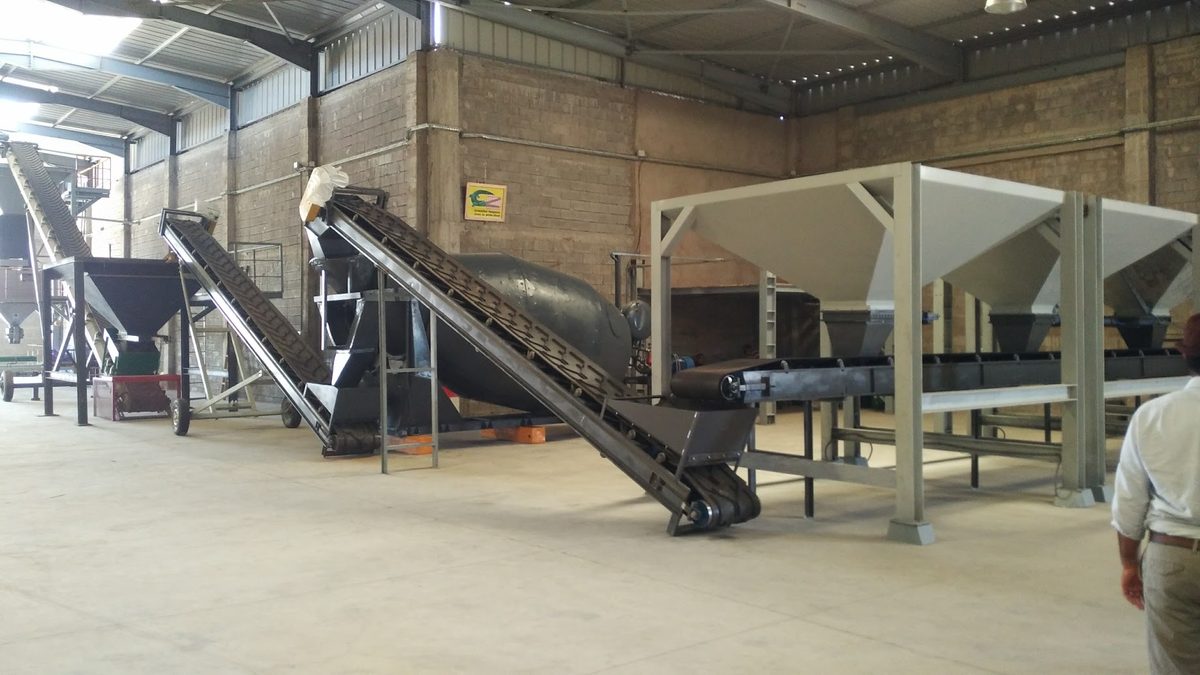
An NPK blending plant receives basic raw materials — urea, DAP, phosphate, potassium chloride or sulphate, micronutrients — and combines them to the required formula. Each component is stored in its own hopper and dosed by weight, not by volume: the only method that guarantees the exact grade printed on the bag.
You can then answer a precise agronomic requirement: one formula for citrus, another for sugar beet, another for greenhouse horticulture. That is a commercial argument your reseller competitors do not have.
The production cycle, step by step
- Intake and storage. Raw materials arrive in bulk or big bags and are distributed into storage hoppers by elevator or conveyor.
- De-agglomeration. Caked components pass through the cage mill before dosing — essential for urea after storage.
- Gravimetric dosing. The PLC calls up the selected recipe and doses each component on the scale to its exact set point.
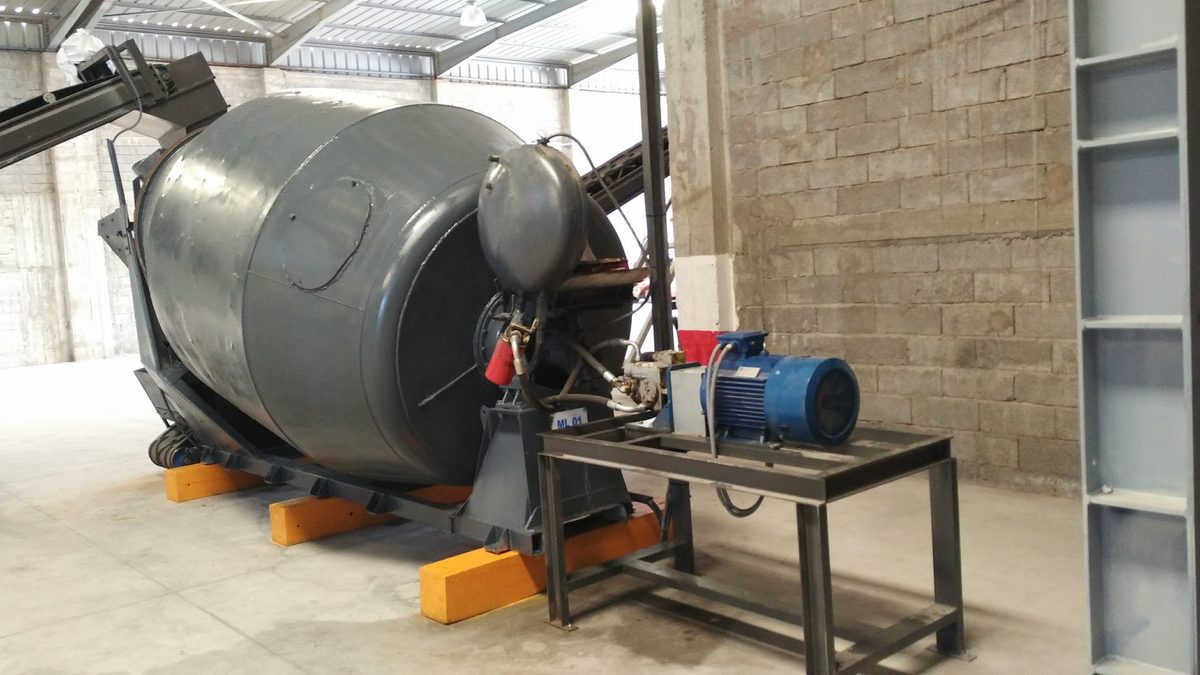
- Mixing. Weighed components are discharged into the blender, which homogenises the batch for a programmed time per formula.
- Safety screening. A vibrating screen removes agglomerates and foreign bodies before packing.
- Bagging. The finished blend goes to a bagging station for 25 to 50 kg bags, big bags, or direct bulk loading.
Programmable recipes and traceability
Each formula is stored in the Siemens S7-1200 PLC: components, percentages, mixing time. The operator selects the recipe on the touchscreen HMI and starts the cycle — no risk of manual dosing error.
The plant records for every batch: date and time, formula applied, actual weights dosed component by component, deviation from set point and total quantity produced. This production log is your proof of conformity in the event of an inspection or a customer claim on fertiliser grade.
Data is exportable and can be transmitted to our cloud supervision platform for remote monitoring and multi-site consolidation.
An installation sized to your production
There is no standard blending plant. Capacity, number of component hoppers, blender volume and packing method depend on your annual production, the number of formulas to manage and your site constraints.
Our engineering department carries out the full design: mass balance, layout, structure, installed power, conveying rates. You receive a technical file with layout drawings before any commitment.
We then deliver turnkey: manufacturing, site erection, connections, programming, production trials, operator training and post-start-up support.